A bathroom vanity faces daily splashes, humid air, cosmetics, cleaning chemicals, and occasional leaks. Its surface may look flawless in a showroom, yet perform poorly beside a steamy shower. That is why homeowners should ask, “how durable are different bathroom vanity materials,” before choosing a finish, color, or cabinet style.
The National Kitchen & Bath Association’s 2024 Bathroom Design Trends Report highlights stronger interest in low-maintenance surfaces, improved storage, and long-term functionality. Houzz’s 2024 U.S. Bathroom Trends Study also shows that homeowners continue investing in bathroom upgrades, making replacement costs and service life important considerations. These findings support a practical approach: compare moisture resistance, impact strength, repairability, and maintenance requirements together.
Kerrie Kelly, FASID, an interior designer and former NKBA National Chair, has stated, “Good design should serve the way people live.” That principle applies directly to vanity materials. A solid-surface top can often be repaired after minor scratches. Quartz resists staining, but its edges can chip under a hard impact. Natural stone offers distinctive texture, although sealing may be necessary. Thermofoil cabinets clean easily, yet prolonged heat and moisture can weaken their edges. Solid wood can last for decades, but only when properly sealed and ventilated.
No material is perfect.
Real durability depends on installation, ventilation, cleaning habits, and water exposure. This guide compares popular vanity materials through those everyday conditions, not showroom appearance alone. It also acknowledges an uncomfortable truth: the most expensive option may not be the most durable choice for every bathroom.
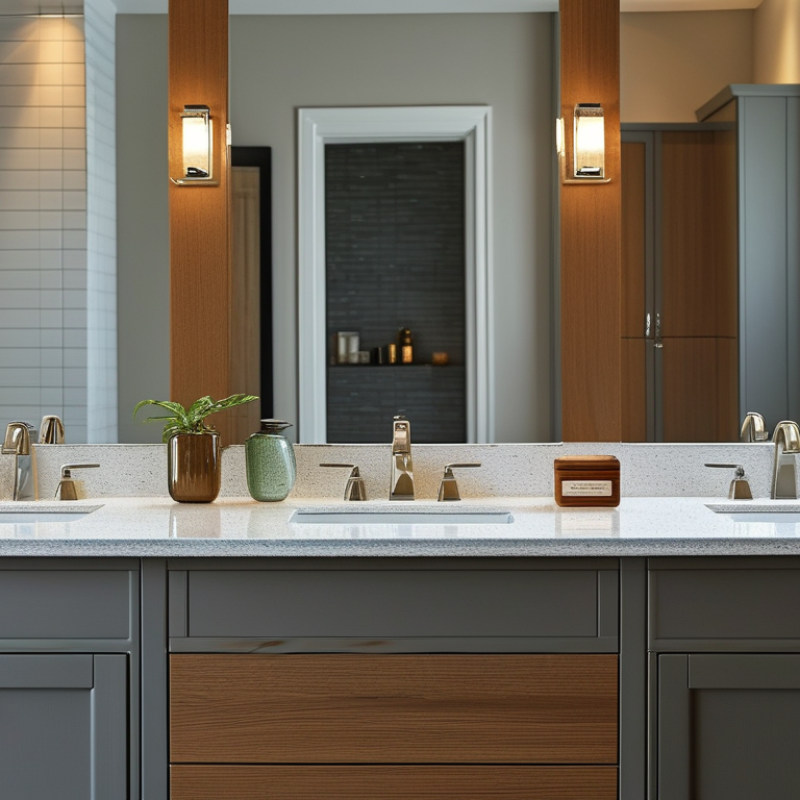
Assess Your Bathroom’s Moisture, Heat, and Daily Usage
How to Choose the Most Durable Bathroom Vanity Material
A durable vanity begins with your bathroom’s moisture pattern, not its appearance. The U.S. Environmental Protection Agency recommends indoor humidity between 30% and 50%. After a hot shower, however, steam can quickly push humidity higher. Poor ventilation may swell particleboard, lift edge bands, and weaken joints. ASHRAE Standard 62.2-2022 recommends bathroom exhaust rates of 50 cubic feet per minute intermittently or 20 continuously. Check whether your fan can meet that level.
Heat also matters. Vanities near radiators, heated floors, or sunny windows face repeated expansion and contraction. The USDA Forest Products Laboratory notes that wood changes dimension as its moisture content changes. Sealed plywood can perform well, but exposed cut edges remain vulnerable. Porcelain, compact laminate, and metal resist moisture better, yet their joints and hardware still need careful installation. I have seen expensive surfaces fail because water sat beneath a loose basin. Material alone cannot correct poor detailing.
Tips: Touch the cabinet edges and inspect every seam. Choose sealed surfaces for wet rooms. Leave ventilation space beneath the sink. If children use the bathroom daily, select scratch-resistant panels and soft-close hardware. Heavy storage needs reinforced shelves, not decorative boards. A perfect material does not exist. Your ventilation habits may matter more than the sample’s finish.
Compare Vanity Materials by Strength, Water Resistance, and Stability
Choosing a durable bathroom vanity starts with three practical comparisons: strength, water resistance, and stability. These qualities overlap, but they are not identical. A cabinet can resist dents yet swell after one leaking supply line. Inspect joints, screw-holding power, surface sealing, and panel thickness. Those details reveal more than a polished showroom finish.
High-quality plywood usually offers a strong balance for bathroom cabinets. Its layered construction holds screws well and resists cracking during installation. Solid wood is strong, but humidity can make it expand and contract. That movement may affect doors and drawer alignment. MDF provides a smooth, affordable surface, yet unsealed edges can absorb water quickly. PVC-based boards resist moisture effectively and clean easily. However, lower-quality versions may flex under heavy countertops. That difference matters.
Water resistance depends on construction, not only the core material. Sealed edges, protected cutouts, and raised cabinet feet help limit damage from splashes. Stability also depends on wall support, level flooring, and proper anchoring. In bathroom renovation work, I have seen a well-made cabinet fail because water collected beneath it. Perfect material does not exist. Even careful measurements can miss a poorly positioned pipe or uneven wall. Ask for moisture-resistance data, inspect edge treatment, and check whether replacement hardware is available. A durable choice should remain solid, aligned, and serviceable after years of daily use.
Evaluate Surface Finishes, Seams, Hardware, and Structural Support
How to Choose the Most Durable Bathroom Vanity Material
A durable vanity begins with its surface finish, not just its core material. In humid bathrooms, inspect the edges, corners, and areas around the sink. Look closely. A sealed, even finish should resist light splashes and routine cleaning without feeling brittle. Matte surfaces can hide fingerprints, while glossy coatings may reveal scratches sooner. However, no finish is maintenance-free. I have seen careful owners damage good cabinetry by leaving wet bottles against the side panels overnight.
Seams deserve equal attention. Tight joints should appear consistent, with no swollen edges or visible gaps. Pay special attention beneath the countertop, where water may collect unnoticed. A properly sealed sink cutout reduces moisture entry, but sealant can age and crack. Check it periodically. Poorly finished seams often fail before the main panel does. That is easy to overlook.
Hardware and structural support determine how the vanity performs daily. Choose hinges and drawer slides that move smoothly without wobbling, preferably with corrosion-resistant components. Test every drawer in the showroom or during installation. It should not sag when fully extended. The cabinet also needs a level base, reinforced corners, and secure wall anchoring, especially with stone or thick ceramic countertops. A vanity can look solid yet flex under weight. My own mistake was judging strength by appearance alone. The better check is practical: press the frame gently, inspect the mounting points, and confirm that the wall can support the installed load.
How to Choose the Most Durable Bathroom Vanity Material
Comparative durability benchmark from 1 to 5, evaluating surface finish, seams, hardware compatibility, and structural support.
Porcelain and quartz perform strongly against moisture and staining. Solid surface materials generally offer the least visible seams because they can be joined and repaired more easily. Granite provides strong rigidity, while the final durability of every vanity also depends on sealed joints, corrosion-resistant hardware, proper anchoring, and adequate cabinet support.
Balance Maintenance Needs, Lifespan, Style, and Total Cost
How to Choose the Most Durable Bathroom Vanity Material
Balance Maintenance Needs, Lifespan, Style, and Total Cost
A durable vanity should fit your daily habits, not only your design plan. In renovation projects, I have seen moisture damage start beneath sinks and along unfinished edges. Solid surface materials resist water well and are easy to clean. Quartz offers strong stain resistance, but its higher purchase price can affect the budget. Properly sealed natural stone creates a refined look, although it may need regular resealing.
Lifespan also depends on construction quality. Moisture-resistant plywood usually performs better than low-density fiberboard in humid bathrooms. Check the cabinet joints, drawer hardware, and sink cutout before buying. These details often matter more than surface appearance. A cheaper vanity may cost more after repeated repairs. Still, expensive materials are not automatically better. I once chose a beautiful stone top that demanded more maintenance than expected. That decision taught me to question showroom impressions.
Tips: Wipe standing water quickly, especially around the faucet and sink edges. Ask about sealing requirements and replacement parts. Measure ventilation, plumbing access, and cleaning space before installation. Choose softer colors if mineral marks bother you. Test samples under warm bathroom lighting, because showroom lights can be misleading. Personally, I now value easy maintenance over perfect visual drama. The choice feels less glamorous, but it works better.
Select the Most Durable Material for Your Bathroom Conditions
Bathroom conditions should decide the vanity material, not appearance alone. The U.S. Environmental Protection Agency recommends keeping indoor humidity between 30% and 50%, and below 60% to limit mold growth. Bathrooms with weak ventilation can exceed that range after long showers. In these spaces, porcelain or ceramic surfaces offer strong moisture resistance. ANSI A137.1 classifies porcelain tile as having water absorption of 0.5% or less.
Water exposure is only part of the problem. The Forest Products Laboratory’s Wood Handbook explains that wood products expand and contract as humidity changes. Solid wood can perform well when sealed correctly, but exposed edges, sink cutouts, and unprotected joints remain vulnerable. High-density fiberboard may be economical, yet swelling can appear quickly after repeated leaks. A sealed plywood cabinet often provides a more forgiving balance between strength and repairability.
Check the room, not the showroom.
For a dry, well-ventilated bathroom, sealed wood or quality plywood may suit the space. For a humid family bathroom, choose moisture-resistant plywood, compact laminate, or porcelain components. Inspect the underside of the countertop and the cabinet base. These hidden areas often fail first. One detail is easy to overlook: even durable material cannot compensate for poor sealing around the basin. I would also leave access for future plumbing repairs. Longevity is partly material choice, but installation discipline matters just as much.
Conclusion
Choosing the most durable bathroom vanity material begins with understanding your bathroom’s conditions. Consider the level of moisture, temperature changes, ventilation, and daily use the vanity will experience. When comparing materials, focus on strength, water resistance, dimensional stability, and how well each option handles impacts and repeated exposure to humidity. Asking “how durable are different bathroom vanity materials” can help you compare practical performance rather than relying only on appearance.
Durability also depends on more than the main material. Inspect the surface finish, edge protection, seams, hardware, joints, and internal structural support, since weak construction can shorten a vanity’s lifespan. Balance cleaning and maintenance requirements with expected longevity, design preferences, and total cost over time. The best choice is the material and construction combination that suits your bathroom’s specific conditions while offering reliable performance, manageable upkeep, and lasting visual appeal.

 Aqua Bathroom