Choosing a bathroom sink affects more than appearance. It changes counter space, cleaning habits, installation costs, and daily comfort. Many homeowners compare undermount and vessel designs without understanding their practical differences. If you are planning a remodel, asking “what is the difference between undermount and vessel sinks” is a sensible starting point.
An undermount sink sits beneath the countertop, creating a smooth surface around the basin. Water and crumbs can be wiped directly into the bowl. This detail feels small, but it matters during busy mornings. A vessel sink rests above the counter, often resembling a glass, ceramic, or stone bowl. It can become a strong visual feature, although its exposed edges need regular cleaning.
Neither option is perfect. An undermount installation usually requires accurate countertop cutting and professional support. It may also offer less flexibility after installation. A vessel sink can be easier to replace, yet its raised height may feel uncomfortable for shorter users. Splashing can become noticeable when the faucet is too low or poorly positioned. I have seen attractive designs become frustrating because these practical details were ignored.
The following seven tips examine height, materials, maintenance, durability, accessibility, installation, and value. They also consider real bathroom conditions, including hard-water marks and limited counter space. Design photographs can be persuasive, but daily use tells the fuller story. Compare the sink with your countertop, faucet, cabinet, and cleaning routine before making a confident decision.
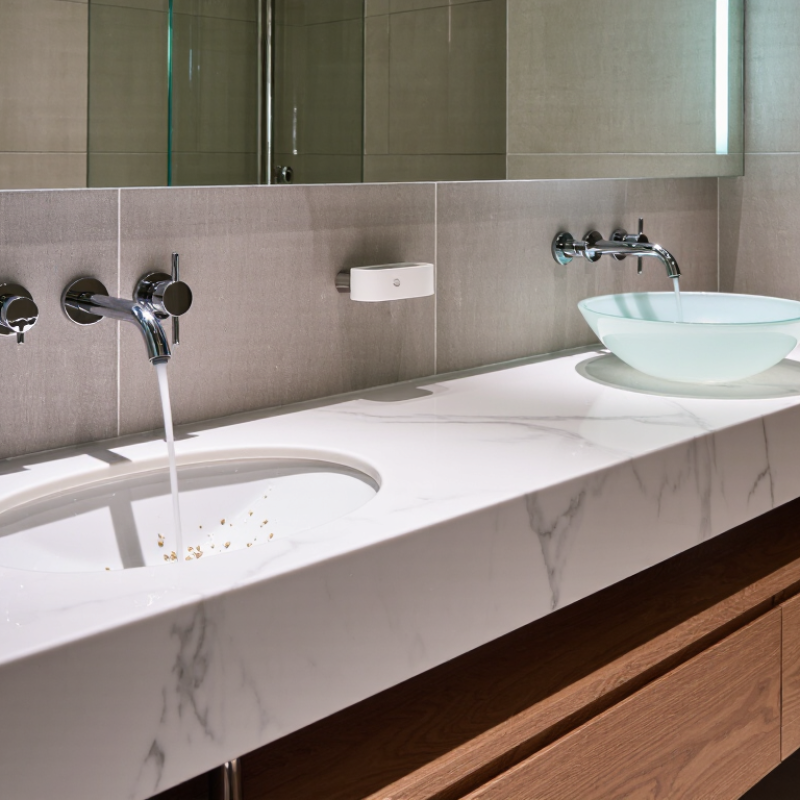
Undermount and vessel sinks differ mainly in how the basin meets the countertop. An undermount sink is fixed beneath the counter, so the counter edge runs cleanly into the basin. You can wipe water and soap directly into the bowl. This detail matters in a busy family bathroom. The rim stays hidden. Installation requires accurate cutting, strong support, and a sealed joint beneath the surface. Stone and solid-surface counters usually handle this method well, while some materials need extra reinforcement.
A vessel sink sits above the countertop, like a bowl resting on a table. Its visible exterior becomes part of the room’s design. The raised basin can create a striking focal point and may preserve more cabinet space below. However, the counter and sink edge need regular wiping because splashed water can collect around the base. Faucet height also needs careful planning. A low faucet may feel cramped. A tall one can cause noticeable splashing. Drain alignment must be checked before installation.
From measuring bathrooms, I have learned that appearance can distract from daily comfort. An undermount basin often feels easier to clean, but repairs beneath the counter may be less convenient. A vessel basin is usually easier to replace, yet its height can challenge children or shorter users. I once underestimated that difference on paper. A cardboard mock-up would have exposed it earlier. Check elbow room, rim height, counter material, and plumbing access before choosing.
| Comparison Dimension | Undermount Sink | Vessel Sink |
|---|---|---|
| 1. Basic Definition | A sink installed beneath the countertop. The countertop edge is exposed around the basin opening, creating a continuous surface from the counter into the sink. | A bowl-shaped sink installed above the countertop. The basin is visible and usually rises noticeably above the counter surface. |
| 2. Installation Method | Requires a precisely cut countertop opening. The sink is secured underneath the counter, commonly with mounting hardware and a suitable sealant. Professional installation is often recommended because the countertop must support the basin. | Usually sits on top of the vanity or countertop and connects through a drain opening. Some models are partially recessed, but the visible basin remains above the counter. |
| 3. Cleaning and Water Management | Water and debris can be swept directly into the basin because there is no raised rim. The joint beneath the counter must still be kept clean and properly sealed to help prevent moisture from reaching the cabinet. | The exposed rim and the area where the bowl meets the counter can collect water, soap residue, and dust. Wiping around the base is important for maintaining a clean seal and countertop. |
| 4. Countertop and Vanity Requirements | Works best with solid, moisture-resistant countertop materials that can receive a finished cutout. The visible countertop area is generally easier to use for placing toiletries or preparing items. | Can be paired with many countertop styles because the bowl sits on top, but the vanity must provide enough height and clearance for the raised basin and faucet. |
| 5. Faucet and Plumbing Considerations | The faucet may be installed on the countertop, on the sink deck, or on the wall, depending on the sink design. The available space behind the basin must match the faucet configuration and plumbing connections. | The faucet is commonly mounted on the countertop or wall because the basin often has limited deck space. The drain height and supply-line layout should be checked before installation. |
| 6. Appearance and Space Effect | Creates a streamlined, integrated appearance and does not add much height above the counter. It is often suitable for minimalist bathrooms and compact vanity layouts. | Acts as a prominent design feature and can add visual height to the vanity. The raised bowl may reduce usable counter space and can feel less convenient for children or shorter users. |
| 7. Durability, Safety, and Best Use |
|
|
| Cleaning Effort | Generally lower daily cleaning effort because the flat counter can be wiped into the basin. | Generally higher daily cleaning effort because the bowl exterior, rim, and countertop joint are exposed. |
| Typical Advantages |
|
|
| Potential Drawbacks |
|
|
| Best Choice When... | Choose an undermount sink when easy wipe-down cleaning, a low-profile design, and a continuous countertop appearance are the main priorities. | Choose a vessel sink when visual impact, a raised bowl design, and flexibility in decorative styling are more important than maximum counter space and minimal cleaning. |
It attaches beneath the countertop. The counter edge flows directly into the basin. Water and soap wipe inward easily.
It sits above the countertop like a bowl on a table. Its outer shape becomes a visible design feature.
An undermount sink usually feels easier for daily wiping. A vessel sink can collect water and dust around its base.
A vessel sink raises the washing surface. Children and shorter users may find it uncomfortable. I once underestimated this difference.
Confirm the cutout, support system, sealed joint, and polished inner edge. Small measurement errors become very visible.
Check hand clearance carefully. A low faucet feels cramped. A tall faucet may create splashing.
Stone and solid-surface counters usually support precise cutouts well. Porous materials need stronger moisture protection around openings.
Yes. Check cabinet height, depth, drain alignment, and plumbing access first. Attractive layouts can become awkward later.
A vessel sink is often easier to replace because it needs a simpler countertop opening. The replacement still needs correct drain alignment.
Make a cardboard mock-up of the basin and faucet. Test elbow room, rim height, and washing comfort before installation.
Understanding what is the difference between undermount and vessel sinks begins with how they sit in relation to the countertop. An undermount sink is installed beneath the counter, creating a smooth, integrated surface that is easy to wipe clean and well suited to modern, streamlined bathrooms. A vessel sink rests above the countertop, making it a visible design feature while offering more flexibility in placement and replacement. Their installation methods also affect counter height, faucet positioning, storage, and the overall visual balance of the room.
When choosing between them, consider cleaning and hygiene, available space, user comfort, material durability, installation requirements, long-term maintenance, and total cost. Undermount models can make small spaces feel more open but may require careful fitting and waterproof sealing. Vessel sinks can add height and character, although their exposed edges may need more frequent cleaning and protection from impacts. Evaluating these seven practical factors alongside your daily habits will help you select a sink that combines appearance, function, and lasting convenience.

 Aqua Bathroom